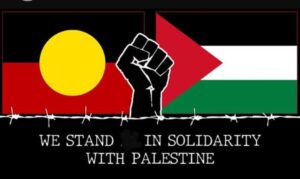
Not long ago, I was naïve enough to believe that change towards justice, albeit gradual, could be achieved within a system rooted in colonial legacies. Today, I can see how that is impossible. I’ve come to realise that genuine transformation is unattainable within a system steeped in colonialism. Australia’s apparent indifference to Palestinian lives as the situation deteriorates in Gaza underscore this realisation.
How can a system, birthed from colonisation, truly comprehend or empathise with the ramifications of enduring colonial subjugation during and after genocide?
How can a system, which took two centuries to acknowledge its indigenous inhabitants as humans in its census, genuinely recognise, sympathise and rectify the impact of its colonisation on the Indigenous peoples, if this same system is incapable of recognising colonisations’ ramifications as they unfold before its own eyes? If Australia is incapable of comprehending the essence of colonisation unfolding in Palestine especially in this era marked by global advancements and a commitment to human rights, how can it confront and heal the wounds inflicted upon its First Nations people?
How can it genuinely address the scars of its own colonisation when it remains silent to the ongoing suffering of Palestinians amid an active act of genocide, let alone side with the colonisers committing the act of genocide? Its silence on the Palestinian crisis, particularly in the face of an ongoing genocide, and its alignment with the perpetrating colonizers, raises profound questions on this nation’s abilities to redress its colonial past.
Australia’s democracy and liberalism are overshadowed by its deep-seated colonial and Eurocentric roots, which impede its ability to truly embody the ideals these terms signify, especially towards people of colour. I can clearly see now that a system, birthed from colonisation and racism despite its democratic and liberal labels, is truly incapable of understanding, let alone sympathising, with the lived-experience of non-white, and non-Europeans subject to colonisation. The stark difference in Australia’s stance towards Ukraine and Palestine reveals the deep-rooted racial hierarchies that influence its political and systemic decisions. Australia’s robust support for Ukraine, evident not just in political statements but also tangible military aid, contrasts sharply with its position on the Palestinian issue whereby Australia sides with the coloniser, Israel.
Australia’s alignment with Ukraine, a predominantly white European nation, suggests a Eurocentric perspective based on racial hierarchies which often prioritises the concerns and suffering of white nations. This is accentuated by Australia’s dedication to preserving international law and sovereignty when it concerns Ukraine, yet seemingly overlooking these principles for the Palestinians, a non-white, non-European population. It’s noteworthy that international law acknowledges the Palestinians’ inalienable right to self-determination, a sentiment echoed by a vast majority of the global community. Yet, Australia, along with several European nations, are hesitant to offer Palestinians the same level of support extended to Ukraine. While Australia has recognised the “Occupied Palestinian Territories” and voiced concerns about “illegal” Israeli settlements prior to October 2023 conflict; its alliance with Israel, a colonising entity, underscores its inherited bias. This alliance raises questions about Australia’s commitment to its professed democratic and liberal values.
In essence, Australia’s pronounced support for Ukraine’s sovereignty, juxtaposed against its stance on Palestine, mirrors its own colonial past and the racial prejudices that persist, often relegating the issues of non-white nations to the periphery.
As the “Voice to Parliament” voting day approaches, my faith in Australia’s ability to commit to the Indigenous communities’ voice and work to rectify their suffering wanes.